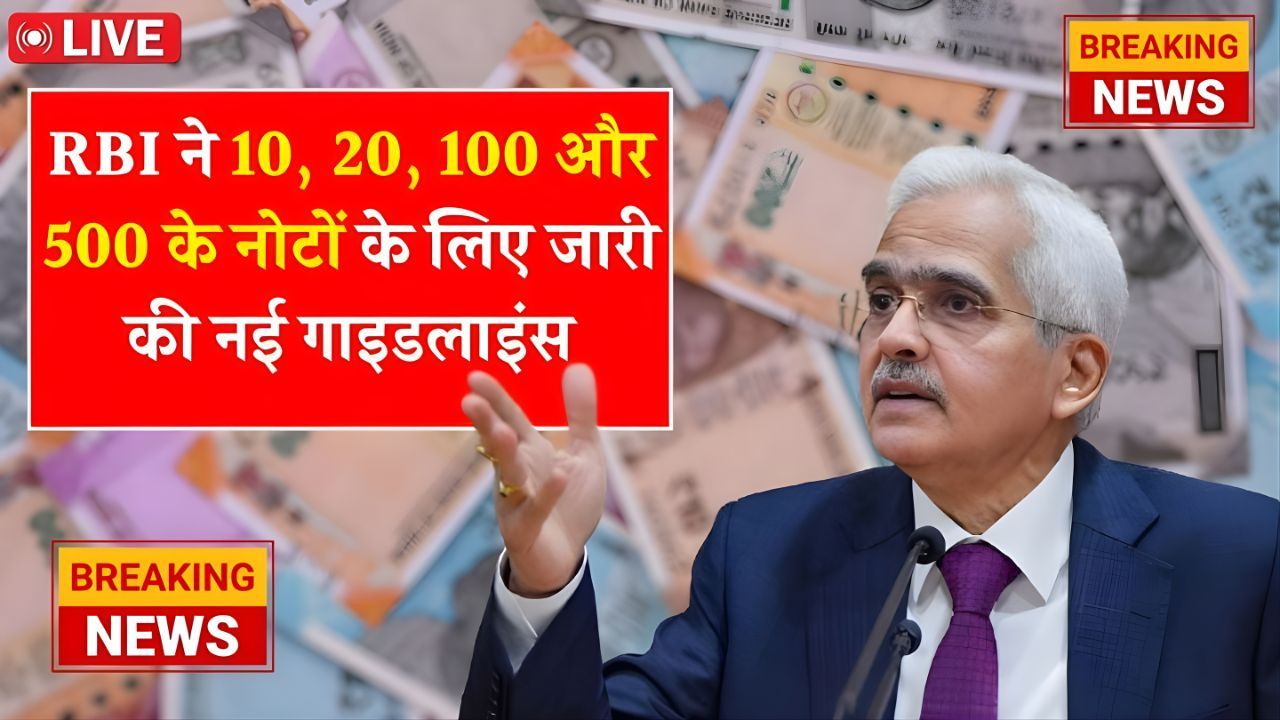
On the 25th of August 2026, one important update about most widely used money notes, that is ₹10, ₹20, ₹100, and ₹500, is published by the RBI. It is aimed at improving the quality of notes, enhancing security features, and reducing hardship to innocent public due to soiled or unfit-old notes. Further issued was a clarification on what will be considered good currency and how banks should be treating old and spoiled notes in the regular course.
No Ban on Existing ₹10, ₹20, ₹100 and ₹500 Notes
The Reserve Bank of India has clarified that the existing notes (₹10, ₹20, ₹100, ₹500) in circulation remain legal tender. None of the aforementioned notes, therefore, has been banned. Anyone can use those notes for buying or selling a few goods/everyday transactions with confidence. The focus of the new rules is on usability, cleanliness, and replacement, and not demonetization or withdrawal.
The Notes Are Smoother and Stricter rm Harshest Notes
The bank notes must substantially follow the policy of a clean note by placing MRIY-torn specifications, that is, perforated notes, dirty in excess or scribbling over or by putting tape all around. This policy seeks all these kinds of problematic local centres to withdraw absolutely such a note from the circulation system. It extends to the nearest branches of the bank for substitution, which can be done with no charge for the customer, provided that the condition applies of being in accordance with the parameters set by RBI.

Directions from RBI come across as fervently mandatory and binding: banks reject to accept reissues of currency notes provided such are of Rs. 10, Rs. 20, Rs. 100, or Rs. 500 in usable condition. Retailers and service providers should also accept any genuine note if certain security features are intact. Complaints may be registered concerning monetary transactions under any of such circumstances, either against the banking department or the market.
Fore more security
The Reserve Bank has urged people to be more observant about watermarks, security threads, and colour-changing ink, especially on ₹100 and ₹500 notes. The attention is supposed to be a way of fighting counterfeiting and encouraging the public to verify notes before making transactions.

Procedures for Old or Unfit Notes
The respective RBI circulars contain that banks must have proper arrangements for providing an exchange facility to the public for providing soiled notes or notes in the condition of mutilation/deficit. However, as per the circulars, even those who do not hold an account with their respective bank or branch can exchange these presently. The RBI has notified banks that denial of such facilities may attract penalties under banking regulations.
Impact on ATMs and Cash Handling
This has direct implications on every ATM. Banks would be required to ensure that ATMs dispense only clean and good-quality notes. Devices found consistently dispensing soiled notes face the risk of getting sealed by the regulator, requiring banks to work on their cash sorting and replenishment processes.

Meaning Impact to the Common Public
Citizens are now reassured and relieved that they are not required to crowd in bank branches or despair over their currency holdings. Simultaneously, what some may not have called quality notes earlier can now safely be termed as notes with promise that are better than before; these notes may find faster acceptance downstream, through markets, banks or ATMs.
RBI Conveys a Message for the Citizens!
Regarding the news about money bans and demonetisations, the RBI has appealed to citizens to be watchful, and not spread any rumours or queries about the same. So, the government has notified about the administrative nature of the issue and its relevance in promoting the cashless transactions, transparency, and confidence.